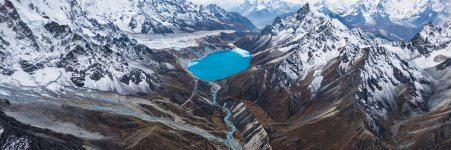
Nepal will begin a high-stakes programme this fiscal year to drain four glacial lakes perched high in the Himalayas, officials said, as the country scrambles to reduce the risk of catastrophic flooding after a disaster that killed more than 1,400 people.
The August disaster began with a glacier collapse on the Nepal-Tibet border that triggered landslides and a flash flood, tearing through valleys and sweeping away roads, bridges, hydroelectric plants and settlements. Rescuers are still searching for more than 5,000 people reported missing in the border region.
Which lakes, and how
The four lakes targeted — Thulagi, Lower Barun, Lumding Tsho and Hongu II — sit between 4,050 and 5,483 metres above sea level in central and eastern Nepal. A 2020 assessment by the United Nations Development Programme and the International Centre for Integrated Mountain Development ranked them among the country's most potentially dangerous glacial lakes.
"Our aim is to lower the risk of the lakes breaching their natural dams and reduce the risk of downstream floods," said Subash Tuladhar, an expert with the Centre for Hydrology and Water Resources Research, the government research body overseeing the project. Water will be drained through canals and gated structures into nearby rivers in a regulated manner, he said.
Design work and detailed studies are to begin in the fiscal year that runs until mid-July 2027. Sanjeeb Baral, the centre's executive director, said the actual draining work, done "through gated structures", would start only after a detailed study and could take up to six years to complete. The plan also includes installing sensors, a flood forecasting and warning system, and measures to build downstream resilience and prepare riverside communities.
Paying for it
The project is expected to cost about US$50 million, funded by the Green Climate Fund, the UNDP and the Nepal government. Tuladhar said Nepal had the skills and experience needed: the country lowered central Himalayan glacial lake Tsho Rolpa by 3 metres in 2000 and Imja lake, near Mount Everest, by 3.4 metres in 2016.
Why the urgency
Nepal has recorded about 26 glacial lake outburst flood events in the past four decades and loses more than 300 lives and property worth millions of dollars to extreme climate events in an average year, according to officials. The latest flood devastated a dozen hydroelectric plants, and officials estimate Nepal will need nearly US$5 billion for early recovery.
Climate scientists say that as Himalayan glaciers retreat, they leave behind unstable lakes held back by little more than loose rock and ice, above valleys home to millions of people. "They are growing fast, are high up in the Himalayas and could cause outbursts any time, due to earthquakes, avalanches, climatic conditions and unplanned human-induced activity," said Samjwal Ratna Bajracharya, a retired ICIMOD glacier expert.
Sources: Nepal plans to drain glacial lakes to reduce flood risks — The Straits Times, Nepal plans to drain four dangerous glacial lakes after deadly flash flood — Radio X