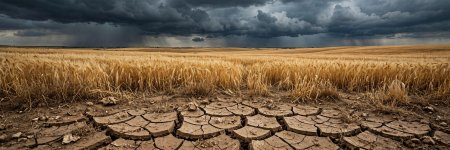
External Affairs Minister S. Jaishankar has warned that the world could face a "major food crisis" in the coming months, as overlapping wars, energy market stress and fertiliser shortages squeeze the Global South. The warning came during an event at the Asia Society in New York on Monday, held shortly after the UN General Assembly's high-level week.
Jaishankar argued that two separate conflict zones are compounding the risk. The war in Ukraine has already disrupted grain flows, and he said he fears what is unfolding around Iran and the Gulf will feed into the same crisis and aggravate it. With energy markets "very tight", major grain exporters potentially unable to ship through the Black Sea, and key fertiliser producers in West Asia and Russia under strain, he said the combination is producing a "very, very stressful situation" for poorer economies.
Fertilisers, grain and energy under pressure
The minister pointed to three interlocking risks. First, fertiliser supplies are at risk of "significant shortages" because some of the biggest producers sit in West Asia and Russia. Second, major grain exporters may find it hard to send shipments out, especially through the Black Sea. Third, a tight energy market and the politics of oil supply are adding a further layer of stress.
Money is already "moving towards safe harbours and away from the Global South", Jaishankar cautioned, warning that the fallout from the conflicts is having a "devastating impact" on the economies of developing countries. He said the world should worry not only about food prices but about "aggravated political instability" — pointing out that the Ukraine war has already destabilised parts of the Global South and that the Iran-Gulf situation could deepen that pattern.
A plea against self-centred policies
Jaishankar also urged countries not to be "so self-centred" in how they manage scarce supplies, calling it "sound common sense" for nations to avoid hoarding at a moment of shared vulnerability. He linked the food outlook to climate pressure as well, noting the world is dealing with a super El Niño alongside the conflict-driven shocks.
The warning echoes the latest United Nations Food and Agriculture Organisation data. The FAO's Food Price Index rose to 133.3 points in August 2026 — its highest since November 2022 — while the world cereal price index climbed 2.2% to its highest level since May 2024. The agency's 2026 world cereal production forecast stands at 2.98 billion tonnes, about 2% below 2025 output.
Sources: Jaishankar warns 'major food crisis' in coming months: 'What is happening in Iran, Gulf is going to feed, aggravate it' — The Indian Express, September 30, 2026; EAM Jaishankar warns of 'major food crisis' in coming months — The Hindu (PTI), September 30, 2026.
Jaishankar argued that two separate conflict zones are compounding the risk. The war in Ukraine has already disrupted grain flows, and he said he fears what is unfolding around Iran and the Gulf will feed into the same crisis and aggravate it. With energy markets "very tight", major grain exporters potentially unable to ship through the Black Sea, and key fertiliser producers in West Asia and Russia under strain, he said the combination is producing a "very, very stressful situation" for poorer economies.
Fertilisers, grain and energy under pressure
The minister pointed to three interlocking risks. First, fertiliser supplies are at risk of "significant shortages" because some of the biggest producers sit in West Asia and Russia. Second, major grain exporters may find it hard to send shipments out, especially through the Black Sea. Third, a tight energy market and the politics of oil supply are adding a further layer of stress.
Money is already "moving towards safe harbours and away from the Global South", Jaishankar cautioned, warning that the fallout from the conflicts is having a "devastating impact" on the economies of developing countries. He said the world should worry not only about food prices but about "aggravated political instability" — pointing out that the Ukraine war has already destabilised parts of the Global South and that the Iran-Gulf situation could deepen that pattern.
A plea against self-centred policies
Jaishankar also urged countries not to be "so self-centred" in how they manage scarce supplies, calling it "sound common sense" for nations to avoid hoarding at a moment of shared vulnerability. He linked the food outlook to climate pressure as well, noting the world is dealing with a super El Niño alongside the conflict-driven shocks.
The warning echoes the latest United Nations Food and Agriculture Organisation data. The FAO's Food Price Index rose to 133.3 points in August 2026 — its highest since November 2022 — while the world cereal price index climbed 2.2% to its highest level since May 2024. The agency's 2026 world cereal production forecast stands at 2.98 billion tonnes, about 2% below 2025 output.
Sources: Jaishankar warns 'major food crisis' in coming months: 'What is happening in Iran, Gulf is going to feed, aggravate it' — The Indian Express, September 30, 2026; EAM Jaishankar warns of 'major food crisis' in coming months — The Hindu (PTI), September 30, 2026.