Artificial intelligence may replace only about 5 per cent of the work currently done by humans over the next decade, Nobel laureate Daron Acemoglu has predicted, arguing that AI development should focus more on improving workers' capabilities than replacing them.
The assessment was shared by Microsoft AI CEO Mustafa Suleyman in a post on X on October 7, while introducing the first issue of The Humanist Review, a magazine published by Microsoft AI that explores the future of artificial intelligence.
A case for 'pro-worker AI'
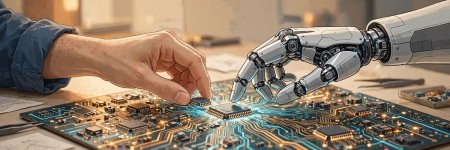
Suleyman, citing Acemoglu's prediction, wrote that "we shouldn't expect much more than about 5% of what humans do to be replaced by AI". The broader argument is that AI should be developed to complement human workers rather than replicate or replace them. "We need to stop building AI to replace people, and start building it to make them better at their jobs," he said, outlining the economist's view.
The post argued that the widespread worry over AI-driven job losses is overblown, noting that 52 per cent of Americans are concerned about AI's impact on their jobs, and said this concern is influencing how AI is being developed.
Gradual economic impact
The economic impact of AI could be more gradual than some expectations suggest. "AI isn't in the productivity statistics yet. Most firms using it aren't seeing real gains. Expect roughly 1.5% added to GDP over 10 years, not a revolution," the post said.
Suleyman compared AI adoption with the spread of electricity, noting that power stations were established in New York and London by 1881, but only about half of factories and homes were using electricity by the 1920s. He suggested AI adoption could be even slower, as companies need to reorganise their operations around the technology.
The post also cautioned against full automation even when AI systems become highly accurate. "Even 99% accuracy isn't enough for full automation. The last 1% is the hard part," it said.
On policy, the post flagged that the United States taxes labour at over 25 per cent and capital at close to zero, which it said effectively subsidises automation, and noted that the seven largest technology companies account for 60 per cent of the Nasdaq, arguing that concentration crowds out new ideas.
Sources:
- AI may replace only 5% of human work over next decade, says Nobel laureate Acemoglu — Indian Economic Observer (ANI)
The assessment was shared by Microsoft AI CEO Mustafa Suleyman in a post on X on October 7, while introducing the first issue of The Humanist Review, a magazine published by Microsoft AI that explores the future of artificial intelligence.
A case for 'pro-worker AI'
Suleyman, citing Acemoglu's prediction, wrote that "we shouldn't expect much more than about 5% of what humans do to be replaced by AI". The broader argument is that AI should be developed to complement human workers rather than replicate or replace them. "We need to stop building AI to replace people, and start building it to make them better at their jobs," he said, outlining the economist's view.
The post argued that the widespread worry over AI-driven job losses is overblown, noting that 52 per cent of Americans are concerned about AI's impact on their jobs, and said this concern is influencing how AI is being developed.
Gradual economic impact
The economic impact of AI could be more gradual than some expectations suggest. "AI isn't in the productivity statistics yet. Most firms using it aren't seeing real gains. Expect roughly 1.5% added to GDP over 10 years, not a revolution," the post said.
Suleyman compared AI adoption with the spread of electricity, noting that power stations were established in New York and London by 1881, but only about half of factories and homes were using electricity by the 1920s. He suggested AI adoption could be even slower, as companies need to reorganise their operations around the technology.
The post also cautioned against full automation even when AI systems become highly accurate. "Even 99% accuracy isn't enough for full automation. The last 1% is the hard part," it said.
On policy, the post flagged that the United States taxes labour at over 25 per cent and capital at close to zero, which it said effectively subsidises automation, and noted that the seven largest technology companies account for 60 per cent of the Nasdaq, arguing that concentration crowds out new ideas.
Sources:
- AI may replace only 5% of human work over next decade, says Nobel laureate Acemoglu — Indian Economic Observer (ANI)